What Usually Goes Wrong, and How We Find It
Most no-cooling calls in Corpus Christi trace back to a short list of culprits: heat-stressed electrical parts, a drain line choked with algae, or a coil that salt air has finally eaten through. The tricky part is that the thermostat tells you almost nothing about which one you have. Corpus Christi Air Conditioning handles AC repair in Corpus Christi and throughout the Coastal Bend, and our technicians prove the cause with meters and gauges before a single part comes off the truck.
Here is what that looks like at your house. The technician checks voltage and amperage, reads refrigerant pressures against the outdoor temperature, measures the temperature drop across the indoor coil, and looks at the drain and the outdoor fins. Then they walk you through it: this is what failed, this is why, and this is the price. Anything that can safely wait goes on a written list instead of on today's bill.
The Repairs We Make Most Often
Listed roughly in order of how often we see them between May and September.
Start Capacitors and Contactors
These small parts absorb a lot of heat and vibration, and coastal humidity speeds up their decline. Typical signs are a condenser that hums while the fan sits still, or a fan that spins while the air inside stays warm. Usually fixed in one trip.
Algae in the Condensate Line
On a humid afternoon a Gulf Coast system can pull more than a gallon of water an hour out of the air. When slime blocks the line, the float switch shuts everything down or the pan overflows into drywall. We blow out the line, flush and treat it, and confirm the switch works.
Pinhole Leaks in Salt-Damaged Coils
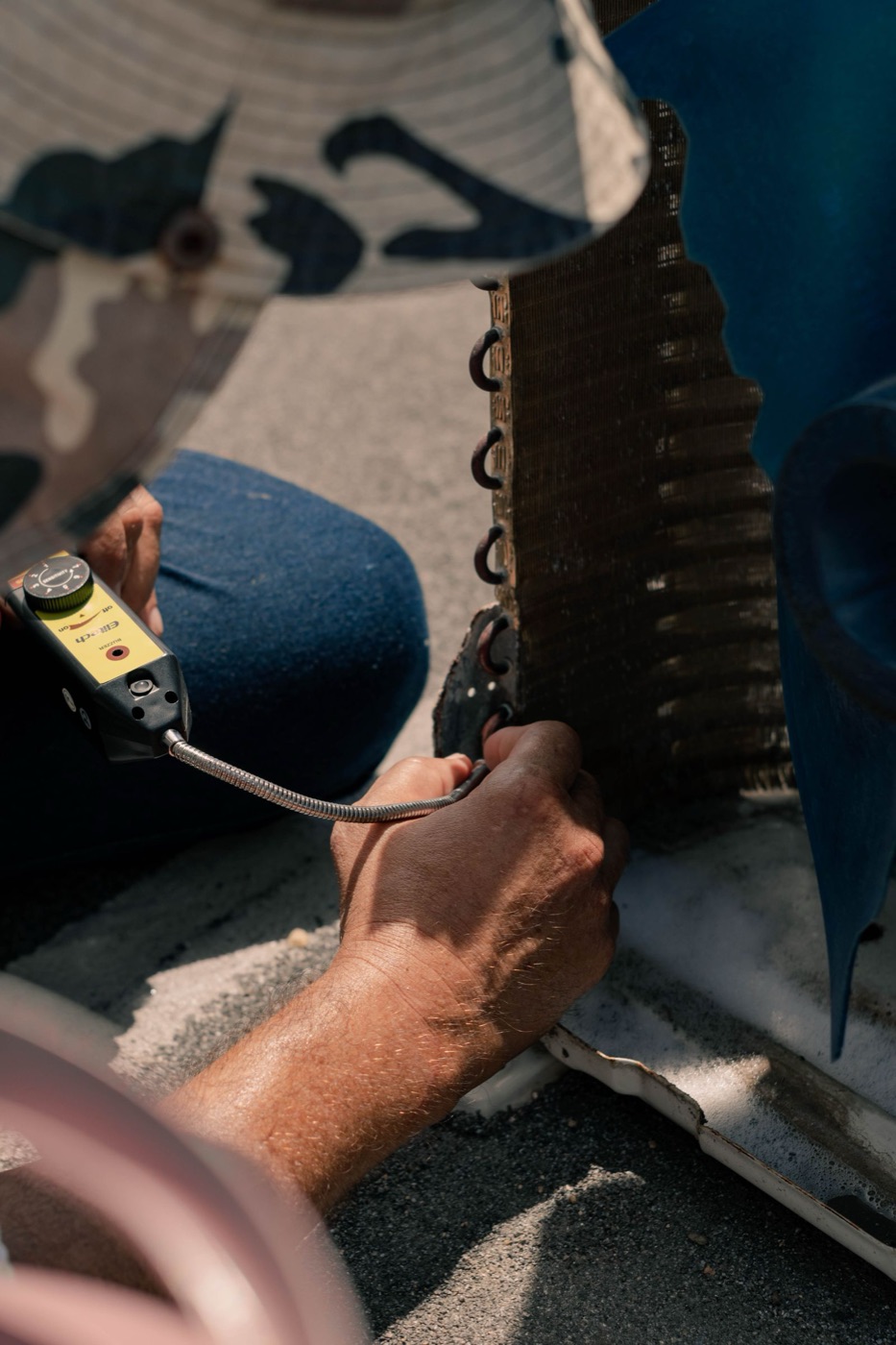
Salt pits the aluminum fins and thin copper tubing until refrigerant seeps out. We pinpoint the leak with an electronic detector or a nitrogen test, and we will be straight with you when a coil is too far gone to patch.
Iced Lines and Airflow Problems
Frost on the copper line at the outdoor unit means the indoor coil is starved of air or refrigerant. Dirty filters, collapsed flex duct in a hot attic, and tired blower motors are the usual suspects.
Typical Repair Price Ranges
| Repair | Typical Range | Midpoint |
|---|---|---|
| Service call and diagnosis | $89-$150 | $120 |
| Capacitor replacement | $150-$350 | $250 |
| Drain line clearing and treatment | $100-$225 | $160 |
| Leak detection plus recharge | $350-$1,600 | $950 |
| Outdoor fan motor | $350-$800 | $575 |
| Compressor replacement | $1,600-$3,200+ | $2,400+ |
Planning figures only. These ranges are not Corpus Christi Air Conditioning's published prices or a quote. Your price depends on the make and age of the equipment, the refrigerant it uses, parts availability, and what testing turns up, and it is given to you in writing before any repair starts.
What Happens After You Call
- 1
A Few Quick Questions
What is it doing, how old is it, and has anyone worked on it lately. Two minutes on the phone saves time at the house.
- 2
A Real Arrival Window
You get a two-hour window and a heads-up when the technician leaves the previous job.
- 3
Test, Explain, Price
The technician diagnoses the system, shows you what they found, and writes up the price. You decide.
- 4
Fix and Confirm
After the repair we run the system and check supply-air temperature and drainage before packing up.
What Sets Our AC Repair Apart
Proof Before Parts
You see the meter reading or the failed part before anything gets replaced.
Stocked for Summer
From May on, capacitors, contactors, fan motors, and drain supplies ride on every truck.
Straight Talk on Old Units
On a 12-year-old corroded condenser, we price the repair and tell you plainly whether it is money well spent.
No-Cooling Calls First
Homes without any cooling, and anyone at risk in the heat, get the earliest open slot.